Some links on this page are affiliate links. If you buy through them we may earn a small commission, at no extra cost to you. See our Affiliate Disclosure.
Search “dog hiking gear” and you get lists of forty items. Buy all of them and you will spend hundreds of dollars, carry things you never use, and still be missing something on the trail.
Most dogs need six things to start.
What does a dog actually need for hiking?
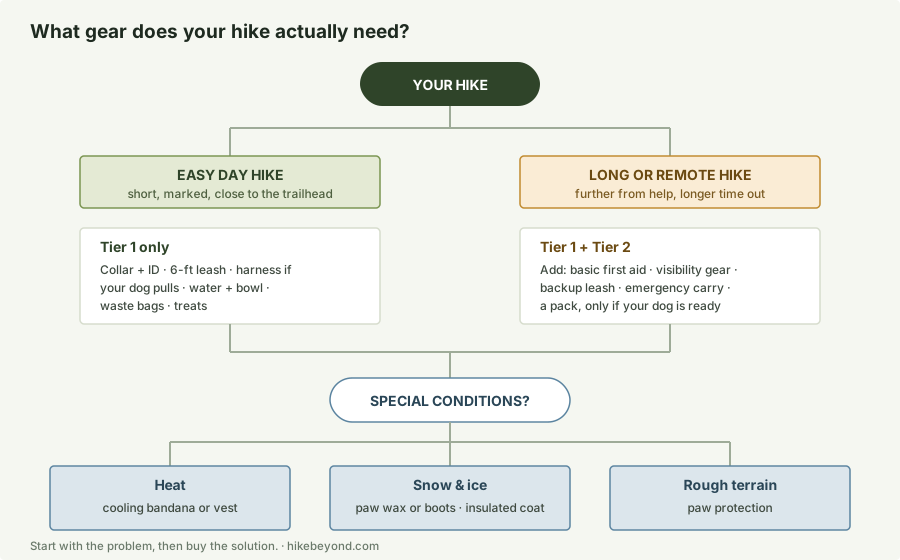
For most easy day hikes: a leash, a collar or harness, current ID, water, a bowl, waste bags, and a few treats. Everything else depends on terrain, weather, distance, and your individual dog.
The first-hike six
| Gear | Why |
|---|---|
| Collar with ID | Identification if you get separated |
| 6-ft leash | The length most parks actually allow |
| Harness (if your dog pulls) | Spreads leash force off the neck |
| Water + collapsible bowl | Natural water isn’t always safe |
| Waste bags + a carrier | Pack it out, every time |
| A few treats | Rewarding recall matters more on a trail |
The American Kennel Club’s hiking checklist covers much the same ground: poop bags, a collar with ID tags and a sturdy 6-foot leash, water and a travel bowl, treats, a first-aid kit, and booties for rough terrain.
Tier 1 — Every hike, from the first one
Collar or harness?
Both are legitimate. Which is better depends on your dog.
| Collar | Harness | |
|---|---|---|
| Carries ID | ✅ Always | ❌ Not usually |
| Best for | Dogs that walk calmly | Dogs that pull |
| Control | Can be easier for some handlers | Better on a puller |
| Puppies learning to walk | ✅ AKC recommends starting here | Later |
| Where force lands | The neck | Spread across chest and shoulders |
You need a collar either way — it carries the ID tag. A harness is an addition for dogs that pull, not a replacement.
Y-shaped vs. horizontal chest strap
| Y-shaped | Horizontal | |
|---|---|---|
| Front strap | Forms a Y between the shoulders | Runs straight across the chest |
| Shoulder movement | Generally freer | Depends heavily on design |
| What to check | Rubbing, rotation, stride | Rubbing, rotation, stride |
Fit matters more than the label. A poorly fitted Y-harness is worse than a well-fitted horizontal one. Judge the fit on the dog in front of you, not the marketing.
What to look for in a hiking harness
- At least two adjustment points, so chest and girth fit separately
- A back handle — useful for helping over an obstacle
- A rear leash attachment
- Reflective detailing, if you hike in low light
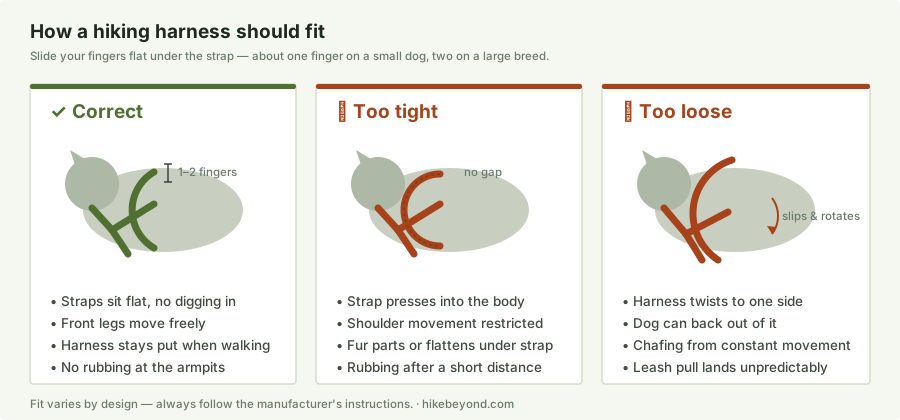
Fit check: slide your fingers flat under the straps — the AKC suggests about one finger on a small dog, two on a large breed. It should not be loose enough to shift or rub. Follow the manufacturer’s guide for the specific model.
→ Y-Harness vs. Chest Strap: How to Choose · Small Dog Harnesses That Actually Fit
Which leash for the trail?
| Leash | Best for | Main advantage | Main drawback |
|---|---|---|---|
| 6-ft standard | Almost everything | Compliant nearly everywhere | Less freedom |
| Hands-free waist | Scrambling, poles | Hands free | Sudden pulls hit your back |
| Long line (15–30 ft) | Quiet open trails, training | More room to explore | Tangles; often over legal length |
| Retractable | Not recommended for trails | Variable length | Thin line, less predictable control |
⚠️ A long line does not make you legally compliant. Many parks cap leash length — often at six feet — and a 30-foot line exceeds that. Some areas require a leash at all times regardless. Check the rules for the specific trail first.
Starting choice: a standard 6-foot leash. Simple, predictable, allowed almost everywhere.
→ Hands-Free Leashes: Are They Worth It? · Long Lines for Trail Training · Off-Leash Rules & Where They Actually Apply
Water
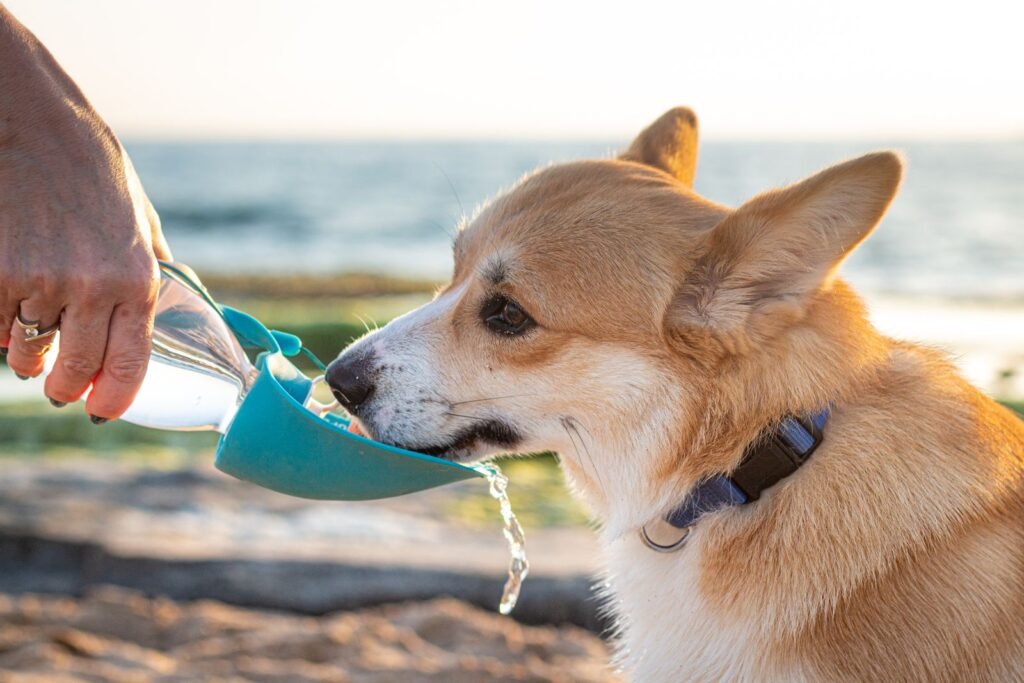
Pack: water for your dog (separate from yours) · a collapsible fabric or silicone bowl · extra for longer outings.
⚠️ Don’t rely on streams as your dog’s water source. Natural water isn’t always safe to drink.
Skip bowls with rigid rims — a fabric bowl folds smaller than a phone and does the same job.
→ How to Choose a Collapsible Travel Bowl · Can My Dog Drink From a Mountain Stream?
Waste
| ✅ Do | ❌ Don’t |
|---|---|
| Bring more bags than you need | Leave a bag beside the trail “for later” |
| Carry a clip-on holder or odor-proof pouch | Assume burying is permitted |
| Follow the rules for that specific area | Assume someone else will deal with it |
“Bag your pet’s waste” is the first of the AKC’s four B.A.R.K. principles — alongside always leashing your pet, respecting wildlife, and knowing where you are allowed to go.
→ Leave No Trace: Managing Dog Poop on Trail
Identification
Before you leave:
- ID tag attached
- Phone number on the tag is current
- Microchip registration and contact details are up to date
- GPS tracker — optional, for remote or off-leash-permitted areas
Two-minute check: call the number on your dog’s tag before the hike. If it doesn’t ring, update it. The chip itself is only half of it — what matters is the registration record behind it.
→ How to Choose a GPS Collar for Hiking
Treats
Easy to forget, genuinely useful, and on the AKC’s own hiking list. Treats give you something to reward recall with — which matters far more on a trail than in a park.
Short hike: a handful. Longer outing: food for the duration, plus a little extra in case you are out longer than planned.
→ Best High-Calorie Trail Treats
Tier 2 — Add as hikes get longer
| Gear | Add it when… | Why |
|---|---|---|
| Basic first aid | You’re hiking further from the trailhead | Handle a cut pad until you reach the car |
| Visibility gear | Low light, or hunting seasons | Be seen |
| Backup leash | Remote trails | A broken clip becomes a serious problem |
| Emergency carry | Remote hiking with a mid/large dog | Moving an injured dog is very hard |
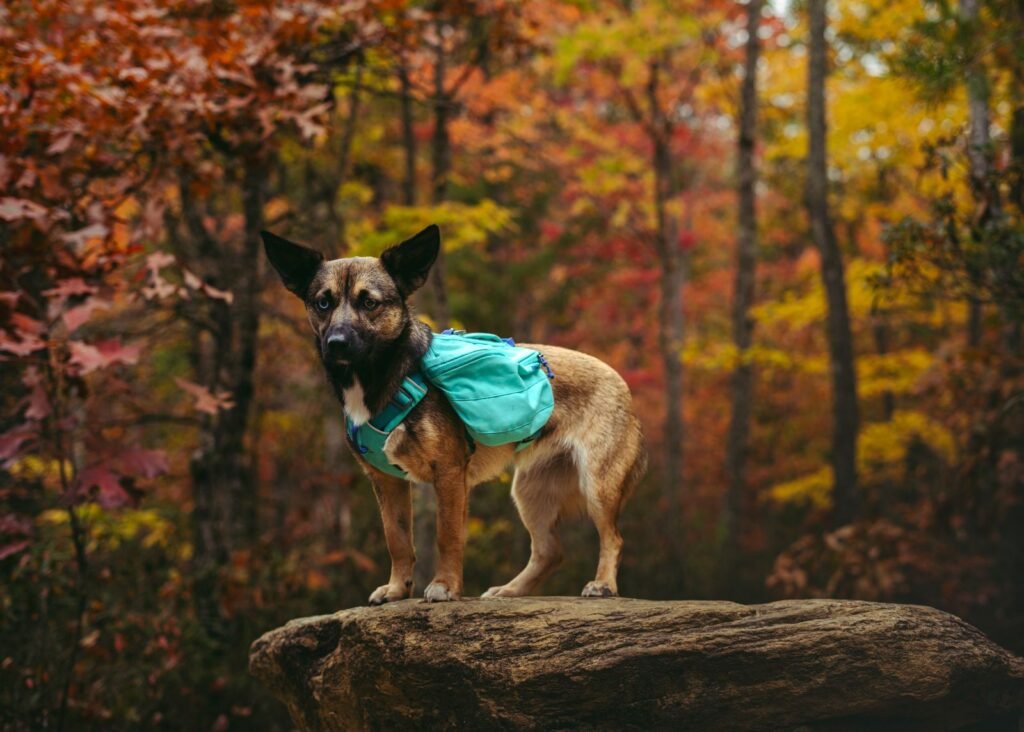
| Dog backpack | Your dog is grown and conditioned | Carry its own water and food |
Should your dog carry a pack?
Is your dog fully grown?
→ No: skip loaded packs entirely.
→ Yes ↓
Is your dog healthy and conditioned for the distance?
→ No: build fitness first.
→ Yes ↓
Start with a very light load → check fit, movement and rubbing → increase gradually if all is well.
⚠️ There is no single safe load for every dog. You will see a percentage-of-body-weight rule quoted widely. It is usually repeated without context, sources differ on the number, and it does not apply to growing dogs at all. We cover where that figure comes from — and what it leaves out — in a dedicated article.
Before buying, read the fitting guide. A pack that shifts is worse than no pack.
→ How Much Weight Can a Dog Carry? The 10-15% Rule · Dog Backpack Fitting Guide · How to Choose a Dog Backpack
A basic first-aid kit
Start with: self-adhering bandage wrap · gauze · basic wound-cleaning supplies · tweezers · disposable gloves · your vet’s number and the nearest emergency clinic.
One item worth including is self-adhering bandage wrap (vet wrap, or the brand name Coban). It sticks to itself rather than to fur, which is why ordinary plasters fall straight off a dog.
Goal: handle a minor problem long enough to get back to the trailhead safely. Not a replacement for veterinary treatment.
→ The Ultimate Dog Hiking First Aid Kit Checklist
When visibility gear matters
Low light — early morning, dusk, night → clip-on LED.
Hunting areas — in places where hunting is permitted, a blaze orange vest makes your dog clearly visible. Season dates and rules vary by state and by land type; check before you go.
→ High-Visibility Vests for Hunting Season · LED Safety Lights & Night Visibility
Emergency carry
| Your hiking | Priority |
|---|---|
| Short urban trail | Low |
| Easy day hike | Low–moderate |
| Remote trail | Moderate |
| Several miles out with a large dog | Higher |
Some emergency carrying systems pack down relatively small, which makes them worth considering for remote hiking. Weight and packed size vary considerably between designs — check the specifications rather than assuming.
→ How to Choose an Emergency Rescue Sling
Tier 3 — Only for specific conditions
Do not buy any of these by default.
| Gear | Terrain | Weather | Dog-specific |
|---|---|---|---|
| Paw wax / boots | Sharp rock | Heat, snow, ice | Existing pad problems |
| Insulated coat | — | Cold | Thin-coated, small breeds |
| Cooling bandana/vest | — | Warm weather | Heat-sensitive dogs |
| Goggles (specialist) | Blowing sand | Snow glare, high wind | — |
| Sleeping bag / pad | — | Cold nights | Overnight only |
| Carrier backpack | — | — | Small breeds, short legs |
| Bear bell | Bear country | — | — |
On bear bells: some hikers carry them, but their effectiveness is genuinely debated. Follow local wildlife-safety guidance rather than relying on a bell.
Don’t buy everything on day one
- ❌ Dog backpack — wait until you know your dog enjoys hiking.
- ❌ Boots — wait until terrain or weather gives you a reason.
- ❌ GPS tracker — useful for remote hikes, unnecessary for most short ones.
- ❌ Goggles — specialist conditions only.
- ❌ Matching gear sets — buy on function, not colour.
- ❌ Rigid plastic bowls — a fabric bowl is smaller, lighter, and does the same job.
Start with the problem. Buy the solution.
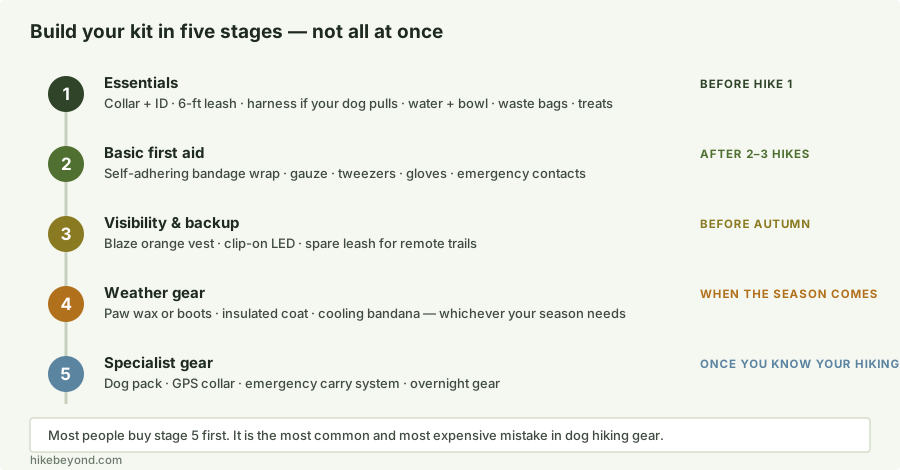
Build your kit in five stages
| Stage | Buy | When |
|---|---|---|
| 1 | Collar + ID, 6-ft leash, harness if needed, bowl, waste bags, treats | Before hike 1 |
| 2 | Vet wrap and first-aid basics | After 2–3 hikes |
| 3 | Visibility gear, backup leash | Before autumn |
| 4 | Weather-specific items | When the season arrives |
| 5 | Pack, GPS, specialist gear | Once you know how you hike |
Most people buy stage 5 first. It is the most common and most expensive mistake in dog hiking gear.
What kind of hike are you planning?
| Your hike | Start with |
|---|---|
| Easy local trail | Tier 1 |
| Long day hike | Tier 1 + Tier 2 |
| Remote trail | Tier 1 + first aid + emergency carry |
| Winter hike | Tier 1 + cold-weather gear |
| Hot-weather hike | Tier 1 + heat gear |
| Overnight | Tier 1 + Tier 2 + overnight gear |
Common questions
Can I use a collar instead of a harness?
Often, yes. A collar is essential for carrying ID, and for many dogs it works fine as a leash attachment too. A harness becomes the better option if your dog pulls, because it spreads leash force over a larger area than the neck. Puppies learning to walk on a leash are usually started on a collar.
How tight should a harness be?
As a starting point, you should be able to slide about one finger under the straps on a small dog, or two on a large breed, without the harness being loose enough to shift or rub. Follow the manufacturer’s fitting guide for the specific model.
Can I use a long line instead of a leash?
Only where local rules allow. Many trails specify a maximum leash length, often six feet, and a long line exceeds that. Check the regulations for the specific area first.
Do dogs really need hiking boots?
Many dogs manage ordinary dirt trails without them. Boots become worth considering on sharp rock, very hot surfaces, snow and ice, or for a dog with existing paw problems.
How much gear should my dog carry?
There is a widely quoted percentage-of-body-weight guideline, but it depends on age, build and conditioning, and it does not apply to growing dogs. See our full guide on dog pack weight before loading anything.
What do people forget most often?
Something to carry used waste bags in. Everyone remembers the bags. Almost nobody plans for the next part.
Continue exploring
| New to this entirely? | Trail Etiquette & Training |
| Small dog? | Hiking with Small Dogs |
| Considering a pack? | Dog Backpacks & Load Carrying |
| Worried about paws? | Dog Paws & Terrain Management |
Sources
- American Kennel Club — Tips for Hiking With Your Dog — hiking gear checklist, B.A.R.K. principles
- American Kennel Club — Dog Harnesses and Dog Collars: Which Is Right For Your Dog? — collar vs harness, fit sizing
HikeBeyond is an information resource, not veterinary advice. Leash rules and hunting seasons vary by location — check the regulations for the area you are hiking. Consult your veterinarian about your own dog’s health and fitness for exercise.